Who actually runs the shadow fleet
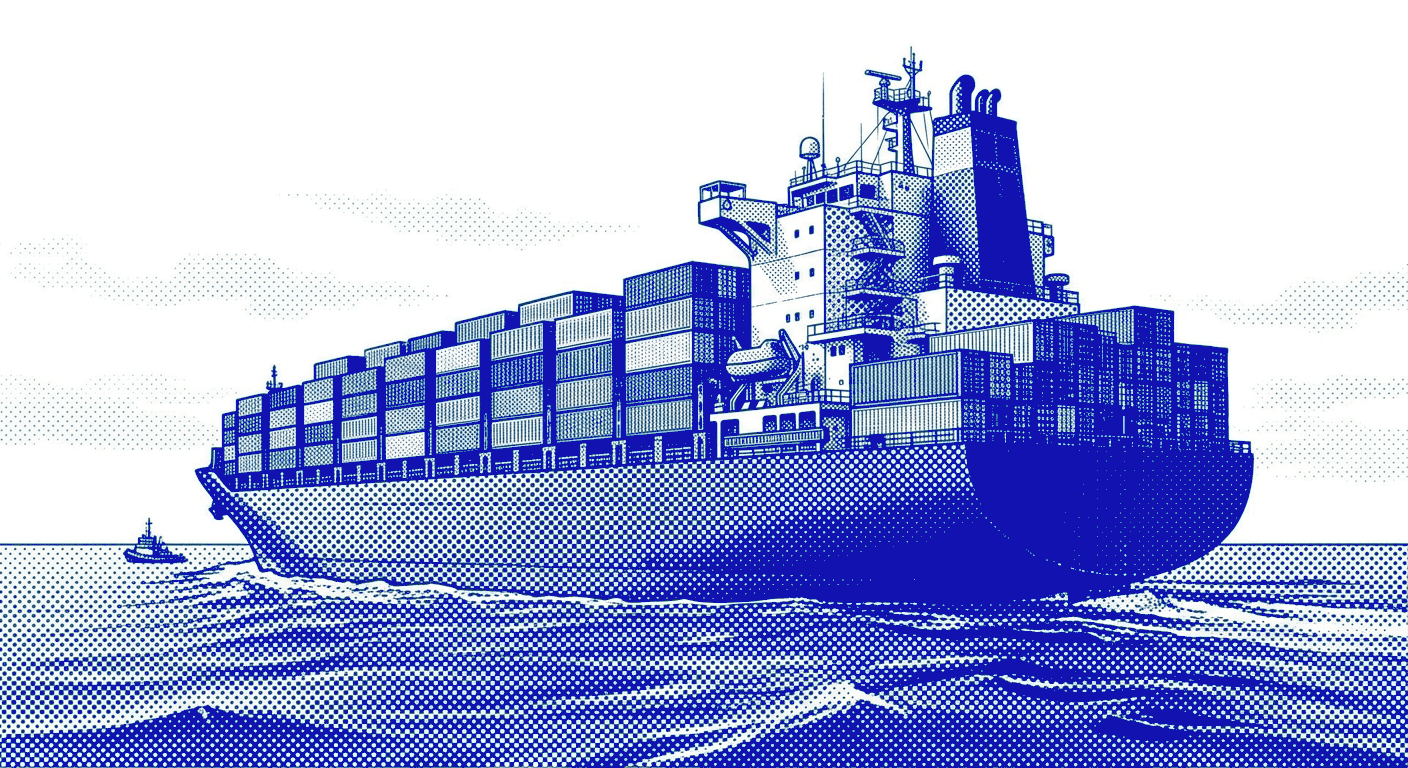
Sanctions on oil are enforced against cargo, but they are evaded by companies. A tanker moving barrels above a price cap is registered to an owner, run day to day by a commercial manager, and kept in class by a safety manager, and those are the parties a bank or insurer actually deals with. Those companies are now screened by name.
How the entities are collected
The source is the shadow fleet register published by the Main Directorate of Intelligence of Ukraine at war-sanctions.gur.gov.ua, which tracks vessels identified as carrying sanctioned cargo.
Collecting it takes two passes. The first walks the paginated register and gathers a link for every vessel listed. The second opens each vessel in turn and reads its detail page, which is where the useful part is: the IMO number, the vessel name and flag, and the companies behind it, each with the role it plays. Three roles are recorded where the register gives them, along with the country a company is registered in and the date it took that role on.
- Ship owner, the registered owner of the hull.
- Commercial ship manager, who charters and operates it.
- Safety management manager, responsible for its technical operation.
That second pass is a page per vessel across the whole register, so it runs in batches rather than all at once, picking up vessels it has not yet enriched on each run and refreshing the list of vessels every time.
What is done with them
The companies are the screened parties. Their names go into the same index every other list feeds, so a name search surfaces them alongside sanctions, PEP, wanted and regulator warning matches, without anyone having to know the shadow fleet data exists.
Open a match and each record names the vessel by IMO, the role that company plays on it, the country of registration and the date from which it held that role. IMO numbers are the reason this is worth tracking at all: a number stays with a hull through renaming and reflagging, which is exactly what these vessels do to shake off attention.
One company commonly appears against several vessels, so a single name can return more than one record. They are shown as separate records rather than merged, because the role and the date differ per vessel and both matter when you are deciding what a match means.
How to read a match
A company appearing here is identified as operating in the shadow fleet by the publishing authority. That is not the same as a designation by OFAC, the EU or the UK, and the record says which list it came from so the two are never confused. Treat it as a reason to look closer rather than a finding in itself.
The shadow fleet coverage page lists both parts of the data with their publisher, and each source page sets out the fields a record carries.
We use cookies to improve your experience on our website. By browsing this website, you agree to our use of cookies.